
Best Podcast Episodes About Money Rehab
Everything podcasters are saying about Money Rehab — curated from top podcasts
Updated: Apr 27, 2026 – 24 episodes
Listen to the Playlist
Ridealong has curated the best and most interesting podcasts and clips about Money Rehab.
Top Podcast Clips About Money Rehab

“… that when I was in the frat, we would still be doing, I used, I, one of my first things, I only had a Subaru. I sold it to gamble it, to get more money to gamble, whatever it might be. There's always schemes. There's always random stuff. And it keeps life so potent that I would never want it any other way. And I, um, I, I would say overall, I'm like, uh, really happy with how I've, I've don't think I've ever made a mistake in my life. I think everything is as it should be. But what about the dopamine maxing? We spoke about this last time, how if you constantly have these huge spikes and then …”
“Um, if I had to, yeah, but it would be, there's no such thing as normal to me in the sense that when I was in the frat, we would still be doing, I used, I, one of my first things, I only had a Subaru. I sold it to gamble it, to get more money to gamble, whatever it might be. There's always schemes. There's always random stuff. And it keeps life so potent that I would never want it any other way. And I, um, I, I would say overall, I'm like, uh, really happy with how I've, I've don't think I've ever made a mistake in my life. I think everything is as it should be. But what about the dopamine maxing? We spoke about this last time, how if you constantly have these huge spikes and then cliffs that you fall off of in terms of just overall dopamine and serotonin. Don't you think that at a certain point it can make you numb to everyday life things? Oh, well, that was a huge crisis for me. I talked about this when I was doing a lot of drugs that I could probably give, not me literally, I could have a child and it would be like, okay, …”
View more
Ridealong summary
After years of addiction, I found that high-stakes gambling brought me the excitement I craved, even more than drugs. In rehab, traditional methods failed to engage me, but the thrill of gambling reignited my passion for life. Now, I wake up excited for the day, proving that sometimes, unconventional paths can lead to recovery.

“… Not like old-school banks that charge you overdraft and monthly fees. Built for you, not the 1%. Imagine cashback and credit building with your own money finally on the same card. No annual fees, no interest, and no strings attached. And when you get qualifying direct deposits, you get 1.5% cash back on eligible Chime card purchases. Chime is not just smarter banking. It is the most rewarding way to bank. Join the millions who are already banking fee-free today. It just takes a few minutes to sign up. Head to Chime.com slash MNN. That is Chime.com slash MNN. Chime is a financial technology …”
“… Yep, even the head of the credit bureau can use a little help in the credit score department. If you can too, then listen up because Chime has a card that can help you do just that. Chime turns everyday spending into real rewards and progress. Not like old-school banks that charge you overdraft and monthly fees. Built for you, not the 1%. Imagine cashback and credit building with your own money finally on the same card. No annual fees, no interest, and no strings attached. And when you get qualifying direct deposits, you get 1.5% cash back on eligible Chime card purchases. Chime is not just smarter banking. It is the most rewarding way to bank. Join the millions who are already banking fee-free today. It just takes a few minutes to sign up. Head to Chime.com slash MNN. That is Chime.com slash MNN. Chime is a financial technology company, not a bank. Banking services, a secured Chime Visa credit card, and MyPay line of credit provided by the Bancor Bank NA or Stride Bank NA. MyPay eligibility requirements apply, and credit limit ranges $20 to $500. Optional services and products may have fees or charges. See Chime.com slash feesinfo. Advertised annual percentage yield with Chime …”
View more
Ridealong summary
Chris Appleton, the hair wizard of Hollywood, transformed his life from poverty and trauma to celebrity success. After coming out as gay in his 20s, he faced immense challenges but ultimately found empowerment through acceptance and his passion for hair. In this segment, he shares how embracing his identity and overcoming self-doubt led to his remarkable career with A-list clients.

“… Republican Party that I am a member of, and an active member of, is that they claim to want to root out Sharia law. We've got Representative Brent Money of House District 2, and he's got this anti-Sharia caucus that they're posturing about. And it's an empty platitude because he voted for vouchers, and so did all the members of that caucus. And so here we are. These entitlements, these subsidies, are going to go to Islamic private schools.”
“… Islamic private schools can apply to the comptroller's office to be a provider to accept the vouchers. And then the families can apply for the voucher and that would end March 31st. So it was extended for them. And the issue that we have with the Republican Party that I am a member of, and an active member of, is that they claim to want to root out Sharia law. We've got Representative Brent Money of House District 2, and he's got this anti-Sharia caucus that they're posturing about. And it's an empty platitude because he voted for vouchers, and so did all the members of that caucus. And so here we are. These entitlements, these subsidies, are going to go to Islamic private schools.”
View more
Ridealong summary
A recent Texas court ruling allows school vouchers to fund Islamic private schools, raising alarms among conservatives. Critics, initially dismissed as extremists, warned that school choice would lead to taxpayer money supporting these institutions. Now, with a deadline extension for voucher applications, the implications of this decision are becoming a reality, challenging the Republican Party's stance on Sharia law.

“… shit that i like now so it's different hell yeah no i'm with it dude uh guys andy question number two andy i'm 20 uh and grew up in a house where money was always tight My parents worked hard, but every conversation about money was stressful. Now that I starting my adult life I noticed I still think about money from that place of fear I either feel like I need to save every dollar or I get anxious about taking any kind of risk for someone like you who gone on to build real wealth How did you change your relationship with money if you didn't grow up around it? Got a young buck on this. Yeah. …”
“question number two like dude nowadays like real talk i get way more excitement and fulfillment from seeing people on my teams get a new car or or get a house or do their thing right like that's the shit that i like now so it's different hell yeah no i'm with it dude uh guys andy question number two andy i'm 20 uh and grew up in a house where money was always tight My parents worked hard, but every conversation about money was stressful. Now that I starting my adult life I noticed I still think about money from that place of fear I either feel like I need to save every dollar or I get anxious about taking any kind of risk for someone like you who gone on to build real wealth How did you change your relationship with money if you didn't grow up around it? Got a young buck on this. Yeah. Okay, first of all, you got to realize that as much as you love your parents and as much as they're great parents and all these things, they don't know shit about fucking money or they'd have a whole bunch. Okay. So you can't, you have to remove yourself from that psychological pattern that you have been brought up with, right? Money's bad, money's …”
View more
Ridealong summary
If you grew up fearing money, it's time to change that narrative. Andy shares how to break free from the psychological patterns instilled by your upbringing, emphasizing that money is simply a tool for leverage, not something to fear. By understanding this, you can empower yourself and use money to create positive change in your life and the lives of others.

“Yeah, I think because of how much I make, like he doesn't see $10,000 or $15,000 as a lot of money. I see it as money that we owe to somebody. That's irrelevant to the feeling. Yeah. It doesn't matter who makes more. It doesn't matter who makes what. It doesn't matter how much the income is versus the behavior. It's the behavior that's causing me to be terrified. Right. You introduced yourself to us as I'm Jenny, the breadwinner. Does he walk around getting told that a lot? I make more money. I make a lot of money. No but I think it gives …”
“Yeah, I think because of how much I make, like he doesn't see $10,000 or $15,000 as a lot of money. I see it as money that we owe to somebody. That's irrelevant to the feeling. Yeah. It doesn't matter who makes more. It doesn't matter who makes what. It doesn't matter how much the income is versus the behavior. It's the behavior that's causing me to be terrified. Right. You introduced yourself to us as I'm Jenny, the breadwinner. Does he walk around getting told that a lot? I make more money. I make a lot of money. No but I think it gives him that safety of oh it only It only It just seems like so little because I make so much But to me every dollar I make I want it to grow and multiply and he still doing that. This makes me feel the same way as if you brought home a half a pound of cocaine. That's a lot of cocaine, Jim. And I'm not going to go this way. Okay. This is a violation of …”
View more
Ridealong summary
When it comes to money, differing values can create tension in relationships. Jenny, the breadwinner, feels terrified by her partner's carefree spending habits, while he views their financial situation as less serious. This segment reveals how aligning on money values can prevent conflict and strengthen partnerships.

“… might be okay. Go to the library. Spot free rent. Spot free rent. Spot free rent. Spot free rent. Doesn't sound free to me. Spending a lot of money there. Billy's ice cream. Chuck and Cheese. Bullshit. Public Square. Mementos. Bullshit. Amazon. Mira Mesa. Lanes. More Amazon, Amazon, Amazon, Amazon, Jack in the Box, Netflix, Harvest International, Rose Donuts, Barnes and Noble, Venue No Money. You're equal spenders. You're not snowballing. You're not payoffs. Hey, guys, where's our savings and investing? This is it? $5,400? That's all we got? Where's you? I don't have... Dude, you're $40. …”
“Damn, girl, you got colonized. Famous footwear, Venmo, Fashion value. I don't even know what these things are. It keeps going. Barnes & Noble. Arizona might be okay. Go to the library. Spot free rent. Spot free rent. Spot free rent. Spot free rent. Doesn't sound free to me. Spending a lot of money there. Billy's ice cream. Chuck and Cheese. Bullshit. Public Square. Mementos. Bullshit. Amazon. Mira Mesa. Lanes. More Amazon, Amazon, Amazon, Amazon, Jack in the Box, Netflix, Harvest International, Rose Donuts, Barnes and Noble, Venue No Money. You're equal spenders. You're not snowballing. You're not payoffs. Hey, guys, where's our savings and investing? This is it? $5,400? That's all we got? Where's you? I don't have... Dude, you're $40. You're a boomer. That's why I... I don't... You're a boomer and you got nothing. Am I a boomer? I'm not a boomer. To me. let try to make this budget good i can wait to hear what this realtor says i hope it that your offer was not accepted because please it can be It just can be guys Oh yeah yeah Guys this is horrendous these minimum fee payments …”
View more
Ridealong summary
With a staggering $235,266 in debt, this couple faces a daunting financial reality. After breaking down their expenses, they discover only $1,500 left each month, making it clear they need to double their income to escape the debt trap. The urgency is palpable as they weigh their options before calling their realtor back.
“… should pay it off But my main question is the reason why is because I would like to have a nice car I can afford it But if it going to come out more money it going to be a bigger headache for me to have to sell it and everything like that And I don't have a big payment on it compared to what I make. But my main concern is my wife is very concerned when it comes to spending. So we used to be really broke. We had a lot of debt, and I paid everything well. No, you paid off everything but the car. True. Okay. So let's say I pay off the car. I will pay off the car. I make enough for my wife to be able …”
“You right So I have two questions One if I should pay it off But my main question is the reason why is because I would like to have a nice car I can afford it But if it going to come out more money it going to be a bigger headache for me to have to sell it and everything like that And I don't have a big payment on it compared to what I make. But my main concern is my wife is very concerned when it comes to spending. So we used to be really broke. We had a lot of debt, and I paid everything well. No, you paid off everything but the car. True. Okay. So let's say I pay off the car. I will pay off the car. I make enough for my wife to be able to spend nicely for stuff, personal stuff. I work at night as well. So I do music and I work at night. What's your household income? So I make $170 after taxes, roughly. Good for you. So it's not him. Good for you. You work hard. Good for you. And you have no debt except the car lease, and you're paying it off. Good. Yes. Okay. And how much is it …”
View more
Ridealong summary
Creating a detailed budget can transform financial stress into confidence, especially for those with spending anxiety. By allocating funds for specific needs, like groceries or clothing, you can reassure your partner that spending is okay within the plan. This approach not only alleviates fear but also fosters a healthier financial mindset.

“my grandboss, Planet Money's executive producer Alex Goldmark, that Alex just could not refuse. Over a million dollars to make a Planet Money book together. And not long after the ink had dried on that contract, they had to come up with a plan to write and design and actually manufacture this book. It sounds like you guys didn't get that much of a honeymoon. No, we jumped right into the hard work of book-writing marriage. And now we had to figure out how to actually make …”
“my grandboss, Planet Money's executive producer Alex Goldmark, that Alex just could not refuse. Over a million dollars to make a Planet Money book together. And not long after the ink had dried on that contract, they had to come up with a plan to write and design and actually manufacture this book. It sounds like you guys didn't get that much of a honeymoon. No, we jumped right into the hard work of book-writing marriage. And now we had to figure out how to actually make a book that we would be proud of, and like on the deadline they gave us. Now in this post-nuptial period, there isn't exactly a hard deadline for the book. Things like the manufacturing schedule and the publication date won't come into play until Tom has a nearly complete manuscript. For this first phase, he has to figure out how to conjure that …”
View more
Ridealong summary
Creating a Planet Money book required navigating complex decisions about content and design. After securing a million-dollar deal, the team jumped straight into the hard work of transforming their ideas into a physical book, facing the challenge of structuring chapters and crafting engaging narratives. With a new plan in place, the writing process began, filled with excitement and the pressure to deliver quality content.
“I'm never going to worry about money because I have you. And you're going to learn to have fun because you have me. I'm going to help you have fun. I'm guessing it's partially why he married you. Oh, yeah. I'm the one that plans the trips and the extra things that we're doing and stuff. But, I mean, you're right. He is responsible. I feel like I'm responsible, too, in a sense, but I feel like there's definitely – I'm trying to figure out a way of – I'm not saying you're …”
“I'm never going to worry about money because I have you. And you're going to learn to have fun because you have me. I'm going to help you have fun. I'm guessing it's partially why he married you. Oh, yeah. I'm the one that plans the trips and the extra things that we're doing and stuff. But, I mean, you're right. He is responsible. I feel like I'm responsible, too, in a sense, but I feel like there's definitely – I'm trying to figure out a way of – I'm not saying you're irresponsible. I'm just saying he's hyper-responsible. He is very hyper-responsible. I mean, if I bought a name-brand ketchup, you know, he's like, what, did we win the lottery? You know, and I'm like, okay, well, you know – Next time you say that, I'm going to hit you with the ketchup. I'm going to smack you across the forehead with a ketchup bottle. Yeah. …”
View more
Ridealong summary
One couple's financial habits reveal a surprising truth: being overly frugal can hinder happiness. While one partner is dedicated to saving, the other aims to enjoy life, leading to a balancing act that could make or break their relationship. Discover how setting aside fun money can create harmony in financial planning.

“… like the game and you're obsessed with building and then you face chaos and destruction. And even though it goes back into that. Exactly. So now the money's going into the company. And then the third level is hard. I think it's part of the hardest, which is when you actually have money because you start to ask interesting questions. And the question a lot of guys have been asking in the last couple of years is, okay, so I built this thing. does this woman actually want me or does she just like the money in the world that i've created and if i went back to zero would you stay would she stay well …”
“… goes down communication becomes tough and hard to have and you have second phase which when you're building something and it's working and you're obsessed and your business becomes your mistress and your your set your side piece And that's like the game and you're obsessed with building and then you face chaos and destruction. And even though it goes back into that. Exactly. So now the money's going into the company. And then the third level is hard. I think it's part of the hardest, which is when you actually have money because you start to ask interesting questions. And the question a lot of guys have been asking in the last couple of years is, okay, so I built this thing. does this woman actually want me or does she just like the money in the world that i've created and if i went back to zero would you stay would she stay well this is a this is a hard question i've asked that question myself don't marry to my wife for 23 years we've been together for 25 five kids and i i've asked that question myself and there's a part of me that's like i'd like to believe she would but i don't know how long she could endure like the collapse so i think the money conversation is a very …”
View more
Ridealong summary
Men face three distinct levels of financial hardship: the struggle of scarcity, the obsession of building wealth, and the complex questions that arise once they achieve financial success. Garrett White shares his insights on how each phase impacts relationships and identity, highlighting the difficulty of discussing money with partners. He emphasizes that true connection is tested when wealth is involved, leading to deep questions about love and loyalty.

“… of that And kind What do you think prevented you from participating? I just wasn ready to open up to strangers And just like in group therapy at the rehab I spent so much time being private and carrying it all in silence and hiding it from the world I wasn ready Yeah Were you also worried people were going to find out like this world I was very worried people were going to find out that I was in rehab. Yeah. Yeah. Because I didn't want my kids to have to deal with that publicly. I think that prevents a lot of people from going, which is very unfair. Yeah. And it's funny too, because so yeah, I …”
“… like Oh, she thinks she's hot shit Because she was on TV Were you not nervous? I honestly didn't care That wasn't my motive It wasn't the reason I was isolating And I think most of them If not all of them Were really understanding and respectful of that And kind What do you think prevented you from participating? I just wasn ready to open up to strangers And just like in group therapy at the rehab I spent so much time being private and carrying it all in silence and hiding it from the world I wasn ready Yeah Were you also worried people were going to find out like this world I was very worried people were going to find out that I was in rehab. Yeah. Yeah. Because I didn't want my kids to have to deal with that publicly. I think that prevents a lot of people from going, which is very unfair. Yeah. And it's funny too, because so yeah, I know what you're talking about. You have all these secrets and you're carrying all this shame. And that's precisely why group things work, is that you go into this group, you put out on a platter these things that you think make you unlovable and unworthy.”
View more
Ridealong summary
Jennie Garth hilariously reveals her struggle with rehab and the shame of being a 'bad mom' while navigating the spotlight. The moment she wakes up in the hospital and realizes her transformation journey has just begun is both compelling and relatable, making her story resonate with anyone who’s faced personal challenges.

“So number one is smart people just overthink it. This is the most common reason why a lot of folks out there just are not good with their money. They research 47 different index funds. They look at every different stock. They feel as though they can buy individual stocks or they feel as though maybe they should be investing in dividend stocks or they feel as though maybe they should look at real estate as well. And they are overanalyzing every single type of investment. In fact, a study at UC Santa Barbara found that people who verbalize and overanalyze their decisions actually perform …”
“So number one is smart people just overthink it. This is the most common reason why a lot of folks out there just are not good with their money. They research 47 different index funds. They look at every different stock. They feel as though they can buy individual stocks or they feel as though maybe they should be investing in dividend stocks or they feel as though maybe they should look at real estate as well. And they are overanalyzing every single type of investment. In fact, a study at UC Santa Barbara found that people who verbalize and overanalyze their decisions actually perform worse than those who go with their gut with complex choices. Overthinking actually disrupts the intuitive pattern recognition that your brain already does naturally. And I think this is something that most of us need to realize. And my favorite study overall on this was a fidelity study done that found that the best performing accounts that they …”
View more
Ridealong summary
Smart people often sabotage their financial success by overthinking their decisions. Research shows that those who analyze too much perform worse than those who trust their instincts. Simplifying your approach and sticking to a plan can lead to better financial outcomes.
“Jason Abenheim, welcome to Money Rehab. Nice to be here. It's great to have you here. There's so much to get into. Obviously, everybody probably asks you a question that I imagine you're going to be annoyed with me asking, but is it a buyer's market? Oh, no, that's not the question that I normally get. It's usually, can you give me some advice on whatever? Like there's some interesting, intelligent nugget that I have that's going to change their financial future. So, no, this is an …”
“Jason Abenheim, welcome to Money Rehab. Nice to be here. It's great to have you here. There's so much to get into. Obviously, everybody probably asks you a question that I imagine you're going to be annoyed with me asking, but is it a buyer's market? Oh, no, that's not the question that I normally get. It's usually, can you give me some advice on whatever? Like there's some interesting, intelligent nugget that I have that's going to change their financial future. So, no, this is an easier and much better question. Yes, it is. It's a buyer's market. But you have to say that. Why? Because you're in the business of selling real estate. Well, I prefer it to be a seller's market, honestly, if I could choose. And I prefer to have that as my answer, too. Yeah, I think I probably have more listings than buyers, although it's probably …”
View more
Ridealong summary
The mansion tax is driving wealthy individuals out of Los Angeles, creating a significant buyer's market. Jason Oppenheim explains that high interest rates and development costs, coupled with an oversupply of listings, have led to a challenging market for sellers. As a result, many affluent residents are leaving L.A., impacting the real estate landscape dramatically.
“… a tremendous amount of wealth just knowing the basics. It's more so mastering that psychology and having an understanding of how you think about money. Now, tier four, this is gonna be the tier where a lot of folks are getting some traction. This is where you could be getting traction in your financial life, in your career, and you could be seeing a big, big difference overall. So this is the folks making $75,000 per year to $100,000 per year. We are approaching that six-figure mark and we wanna make sure that we are taking advantage of our finances based on that. We have a lot of listeners …”
“You don't have to be an expert. You just need to know the basics and have an understanding because you can build a tremendous amount of wealth just knowing the basics. It's more so mastering that psychology and having an understanding of how you think about money. Now, tier four, this is gonna be the tier where a lot of folks are getting some traction. This is where you could be getting traction in your financial life, in your career, and you could be seeing a big, big difference overall. So this is the folks making $75,000 per year to $100,000 per year. We are approaching that six-figure mark and we wanna make sure that we are taking advantage of our finances based on that. We have a lot of listeners in this tier. And so we want to make sure that we are making sure we're taking advantage of this. So this is the tier where I really want you to make sure that you are hitting at least that 15, 20% towards your retirement every single year. Our goal is at a minimum, we want you to save 20% of your income. Some of it needs to go to emergency fund and …”
View more
Ridealong summary
You can achieve early retirement by saving aggressively and optimizing your finances if you earn between $75,000 and $100,000 a year. Focus on saving at least 20% of your income, automating your finances, and consulting tax professionals to maximize your savings. With the right strategies, you can make a significant impact on your financial future and retire earlier than you think.

“… to one of them. I kept telling myself I'd go cancel them later, and of course, later never came. That was before I started using Rocket Money. Rocket Money is a personal finance app that helps find and cancel your unwanted subscriptions, monitors your spending, and helps lower your bills so you can grow your savings. What I love is that it actually shows you every subscription in one place, and if you don't want it, you could cancel right inside the app with just a few taps. No digging through passwords, no sitting on hold. It's simple. It also automatically categorizes your …”
“I'll tell you mine. I realized I was paying for two streaming services I didn't even use anymore, and somehow I had duplicate subscriptions to one of them. I kept telling myself I'd go cancel them later, and of course, later never came. That was before I started using Rocket Money. Rocket Money is a personal finance app that helps find and cancel your unwanted subscriptions, monitors your spending, and helps lower your bills so you can grow your savings. What I love is that it actually shows you every subscription in one place, and if you don't want it, you could cancel right inside the app with just a few taps. No digging through passwords, no sitting on hold. It's simple. It also automatically categorizes your transactions across accounts, so you could actually see where your money is going. Dining, shopping, subscriptions, it's eye-opening. And once you see the patterns, you can set budgets and goals that actually make sense. It feels like having a financial assistant keeping you honest. Let Rocket Money help you reach your financial goals faster. Join at …”
View more
Ridealong summary
In a shocking House Hearing, Trump's top intelligence officials placed the blame for the disastrous war in Iran squarely on him. Congresswoman Elise Stefanik confronted the narrative that misinformation led Trump to make fatal decisions, while members like Castro questioned Israel's actions against Iran despite Trump's directives. This exchange reveals deep divisions and accountability issues within U.S. foreign policy.
“… all around the country. And independent bookstores are just one sales channel where this will all be playing out. So to get a sense of the Planet Money book's chances out in the broader marketplace, I had to go one final link higher in the great chain of publishing. To the person tasked with figuring out the strategy for wringing every possible dollar and cent out of the Planet Money book. W.W. Norton's director of trade sales, Stephen Pace. Yes, I mean, if there's anything that would define me, it was the fact that nothing bothers me more than not being able to make a sale. Stephen fell in …”
“That's coming up after the break. Fisher Nash is just one bookseller out of thousands all around the country. And independent bookstores are just one sales channel where this will all be playing out. So to get a sense of the Planet Money book's chances out in the broader marketplace, I had to go one final link higher in the great chain of publishing. To the person tasked with figuring out the strategy for wringing every possible dollar and cent out of the Planet Money book. W.W. Norton's director of trade sales, Stephen Pace. Yes, I mean, if there's anything that would define me, it was the fact that nothing bothers me more than not being able to make a sale. Stephen fell in love with the book business while working at a bookstore as a teenager. Since then, he ran his own bookstore for a while, became a sales rep for major publishers, all before rising to become the head of trade sales at Norton. Do you ever anthropomorphize your books? Think of them like they're little characters in Toy Story or something with their own …”
View more
Ridealong summary
Stephen Pace, W.W. Norton's director of trade sales, reveals the intricate process behind predicting book sales. He meticulously builds models based on comparable titles to estimate demand and ensure bookstores never run out of popular books. This balancing act between supply and demand is crucial for maximizing sales and minimizing returns in the competitive publishing landscape.
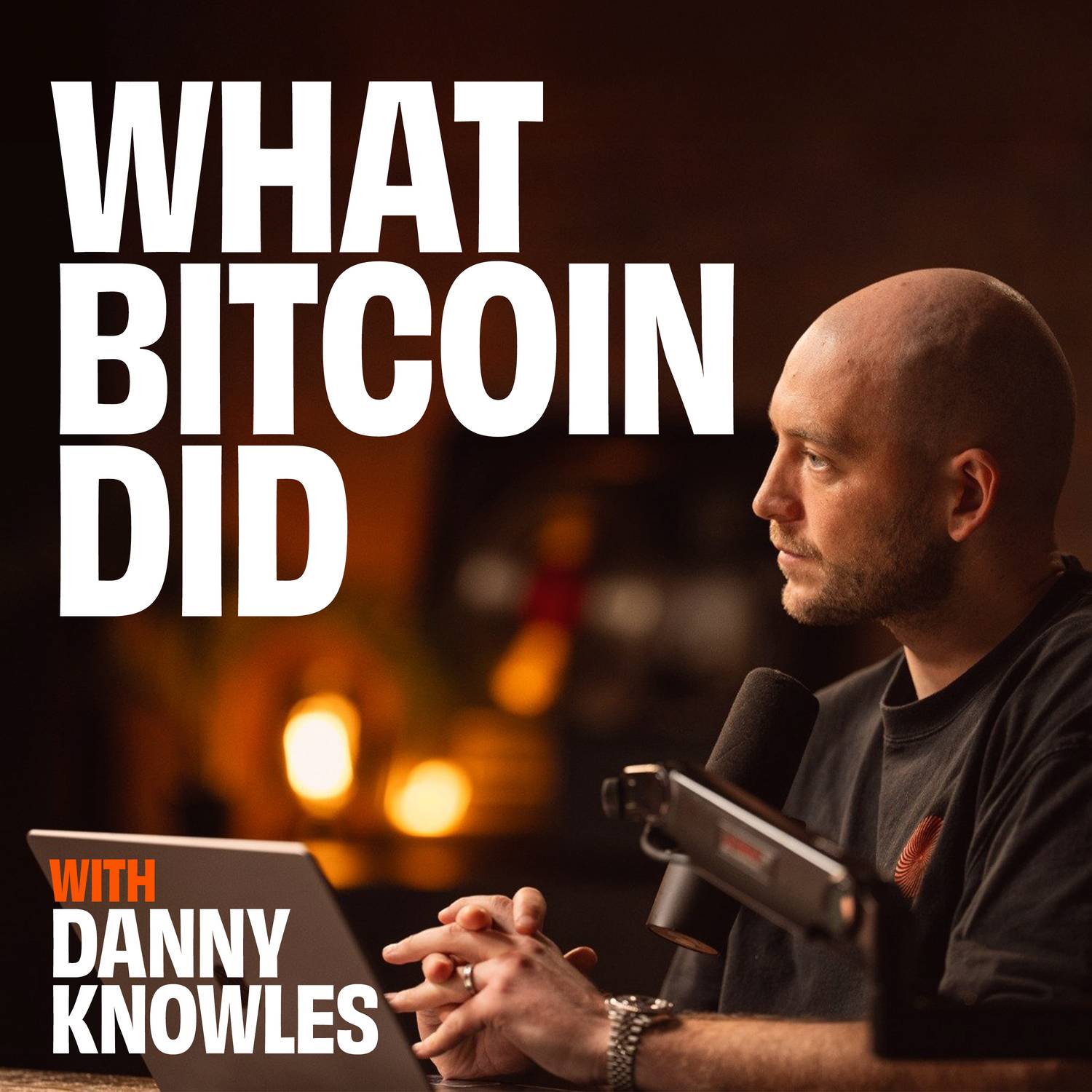
“… people a lot of people inside of this system and it has nothing to do with bitcoin zero to do with bitcoin that this is happening it has to do with money being debased at a crazy rate and physics coming due right and the and the free market coming coming due and re and a realization that we live in a nonsense unsensical world that is more and more control and this is going to create it's going to create psychological breaks everywhere too in people because they're not going to be ready they're They're thinking they're living in a normal world that's always looked this way. And it's not going to …”
“… think we're outsmarting the market we're going to take massive leverage at this at the time thinking it's going to be devalued and then it's going to go into deflation and we're going to owe the leverage and we're going to get wiped out so a lot of people a lot of people inside of this system and it has nothing to do with bitcoin zero to do with bitcoin that this is happening it has to do with money being debased at a crazy rate and physics coming due right and the and the free market coming coming due and re and a realization that we live in a nonsense unsensical world that is more and more control and this is going to create it's going to create psychological breaks everywhere too in people because they're not going to be ready they're They're thinking they're living in a normal world that's always looked this way. And it's not going to look that way. And they're going to take – and so let's say now you, Danny, take this and take a huge mortgage, Bitcoin, at this time. And then mortgage rates go way up at the wrong time. And what does that do to you when you think you played the game properly? so um so from the other system which is growing in in instability and has to do a …”
View more
Ridealong summary
We are on the brink of a deflationary spiral that could reshape our understanding of money and economic stability. Jeff Booth warns that as people cling to outdated notions of financial security, many will sell their Bitcoin for unstable fiat currencies, ultimately leading to chaos. The only way to navigate this impending turmoil may be to hold onto Bitcoin, which could provide a stable refuge amidst the chaos.

“… people in, say, the top 1%. And that's a whole other conversation we could have. But what we want to do is be real about things and recognize, yeah, money isn't going to buy you infinite happiness. It's not going to solve all of your problems, but it's actually going to solve quite a lot of your problems. And if you want to get real about it then let have the conversation Let talk about it Let stop deluding ourselves as you say that none of this matters because we all know that it does Well here a subject Um I never thought about, I, I don't know if money solved all of your problems. Oh, here's …”
“… to be real about, I mean, to your point, the rich are paying a lot of taxes. But there are some things that we could do in terms of the economy where the people at the very, very, very, very top are indeed paying a little bit less compared to the people in, say, the top 1%. And that's a whole other conversation we could have. But what we want to do is be real about things and recognize, yeah, money isn't going to buy you infinite happiness. It's not going to solve all of your problems, but it's actually going to solve quite a lot of your problems. And if you want to get real about it then let have the conversation Let talk about it Let stop deluding ourselves as you say that none of this matters because we all know that it does Well here a subject Um I never thought about, I, I don't know if money solved all of your problems. Oh, here's an interesting, uh, challenge, I guess. Did money solve more of your problems 200 years ago than it does now. Um, I do feel like everything sort of comes back to money. Now, everything is about food and it's about transportation and it's about living, you know, in, in LA, I mean, average rents $2,200 or something like I, you would, you would, you …”
View more
Ridealong summary
In this segment, Ed Elson humorously reflects on how money used to buy essentials like food and shelter 200 years ago, but now it's about much more than that. He shares a relatable story about living with roommates on a futon, illustrating that despite having basic needs met, happiness still eludes many young people today. The contrast between past and present expectations of money creates a compelling discussion about ownership and fulfillment.

Ridealong summary
In this hilarious segment, the host teases the audience about his hidden stash of 'boat cash,' leaving everyone guessing its location. The playful banter about where he keeps his money, including a cheeky reference to the freezer, makes it entertaining and relatable.
“… you're doing what you're doing. And so all of those are really, really important. Now, if you don't know how to develop an investment plan, Master Money Academy can help you do that step-by-step. And you can look down below and get a seven-day free trial inside Master Money Academy. We help people with investment plans all the time inside Master Money Academy. I think it's a really, really important place for you to be if you don't know how to come up with your own investment plan. And so that's a really, really powerful place where you can meet other community members who are like-minded, who …”
“… in place, and then you begin investing. Because if you don't have that plan written down or in place, you're not going to know your why, and you're going to make investment mistakes instead of ensuring that you have that plan in place and you know why you're doing what you're doing. And so all of those are really, really important. Now, if you don't know how to develop an investment plan, Master Money Academy can help you do that step-by-step. And you can look down below and get a seven-day free trial inside Master Money Academy. We help people with investment plans all the time inside Master Money Academy. I think it's a really, really important place for you to be if you don't know how to come up with your own investment plan. And so that's a really, really powerful place where you can meet other community members who are like-minded, who are also working on the same plan. So check out Master Money Academy down below if you have not done so already.”
View more
Ridealong summary
Checking your investment portfolio daily can lead to emotional decisions and poor choices, especially during market dips. Instead, establish a solid investment plan and check your portfolio less frequently—monthly or quarterly is ideal. Master Money Academy offers a step-by-step guide to creating that investment plan, ensuring you're informed and confident in your decisions.


Top Podcasts About Money Rehab
The Personal Finance Podcast
5 episodes
The Ramsey Show
3 episodes
Money Rehab with Nicole Lapin
2 episodes
Planet Money
2 episodes
The Iced Coffee Hour
1 episode
Bannon`s War Room
1 episode
REAL AF with Andy Frisella
1 episode
Financial Audit
1 episode